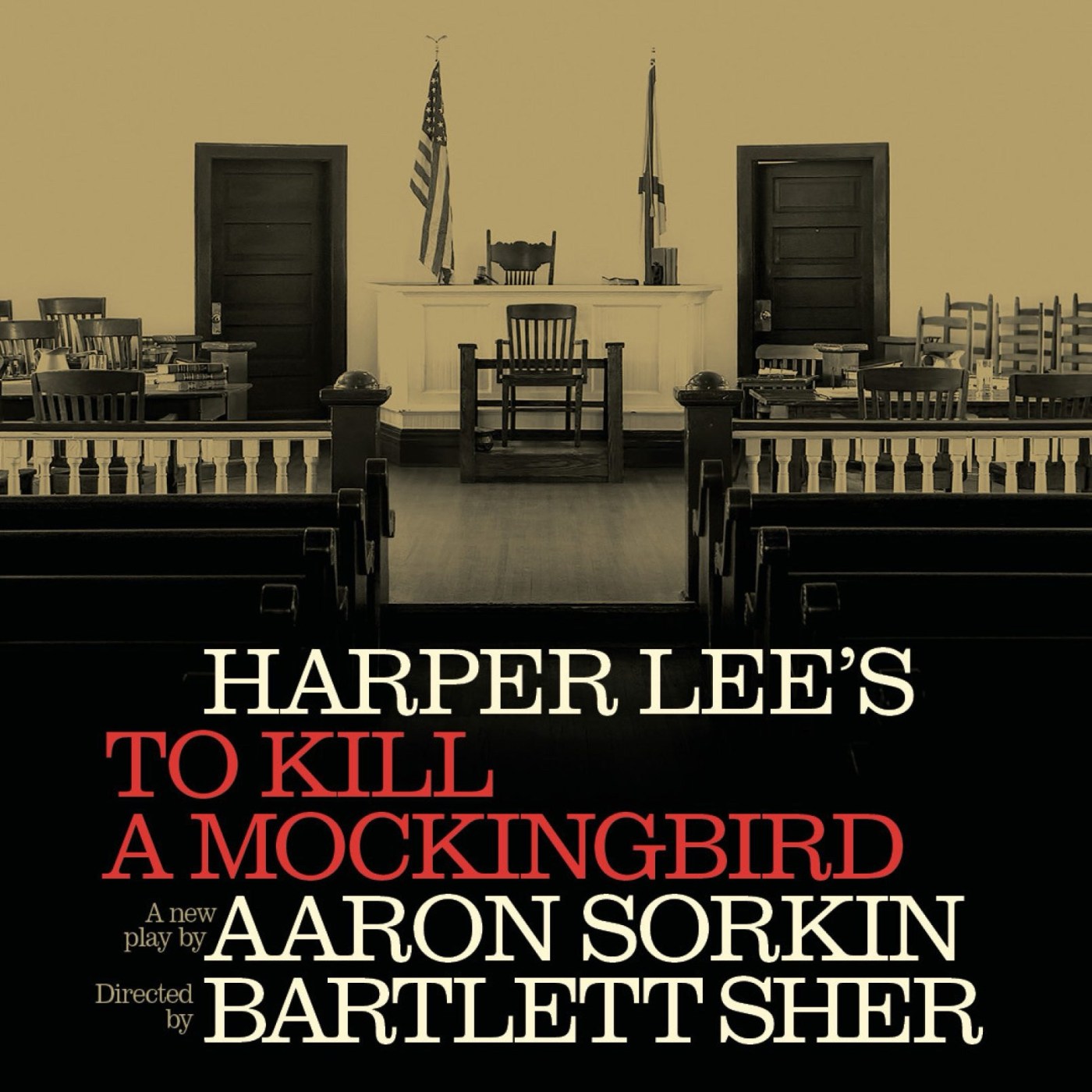
Wednesday 17th September 2025 at Leeds Playhouse
⭐️⭐️⭐️⭐️⭐️
Harper Lee’s To Kill a Mockingbird tops many a list of important classics, and with good reason. I remember falling in love with the charming ruffian nature of the Finch children and the admirable dignity of Atticus Finch as a teenager, and I have to say this particular production – a new play from Aaron Sorkin, directed by Bartlett Sher – is a pretty golden one.
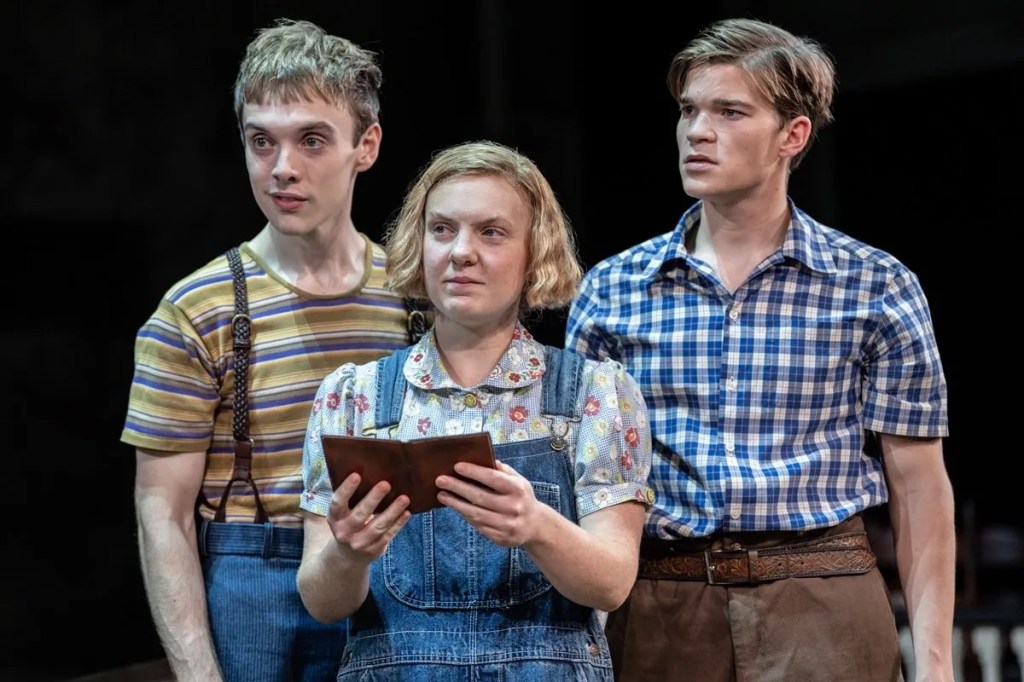
The story is a layered one with many characters, but in brief: we follow the summer of Scout and Jem as it’s disrupted not just by the arrival of a new friend, Dill, but also a life-altering trial fought by their father, Atticus. Tom Robinson, a black man, has been accused of assault by Mayella Ewell, a white woman. The principled Atticus, with his heartfelt belief in teaching his children the value of a good moral compass, is soon persuaded to do what is right for the wrongly accused – and fireworks fly in 1934 Maycomb County as a result.

The Finch children and their summertime pal Dill tell the story, breaking the fourth wall to energetically guide us through their retrospective of an eventful summer – bickering a little over the details as they go. It’s a thoroughly charming approach that totally pulls us into the story and quickly finds that emotional tie with the well-meaning youngsters. And that youngster element is the driving force of success here, too.
Anna Munden’s take on Scout is superb. She absolutely nails that transient space between childish immaturity and a blossoming awareness of life’s bigger pictures. There’s a sense of naivety laced with great comedy, the kind borne of youthful overzealousness. Gabriel Scott carries the same youthful charm but adds a masculine edge as Jem – keen to emulate the towering honour of his father, he’s endearingly caught between childish ignorance and an uncertain manliness.

When it comes to endearing though, it’s Dylan Malyn’s Dill Harris who takes the crown, with a performance full of perfect comic timing and skilful layering which allows Dill to warm and break hearts by turn. Also warming to the heart are Andrea Davy’s performance as the sharp-witted but big-hearted Calpurnia and Harry Attwell’s gentle and vulnerable Boo Radley – both of whom I’d have liked to see more of, with the Boo Radley element feeling particularly limited.

All that said, it is inevitably Richard Coyle’s central performance of the great Atticus Finch that solidifies the production as a winner. Coyle exudes dignity in every element of his performance, from his expressive dialogue and meaningful pauses to subtle movements underscoring his gravitas within any space – he is a perfect Atticus Finch. What’s also great about this production though is the way in which it highlights additional moral heroes we might have forgotten about, like Simon Hepworth’s Link Deas and Stephen Boxer’s Judge Taylor – the former providing surprising heartbreak and the latter providing something of a comical version of the noble Atticus himself.
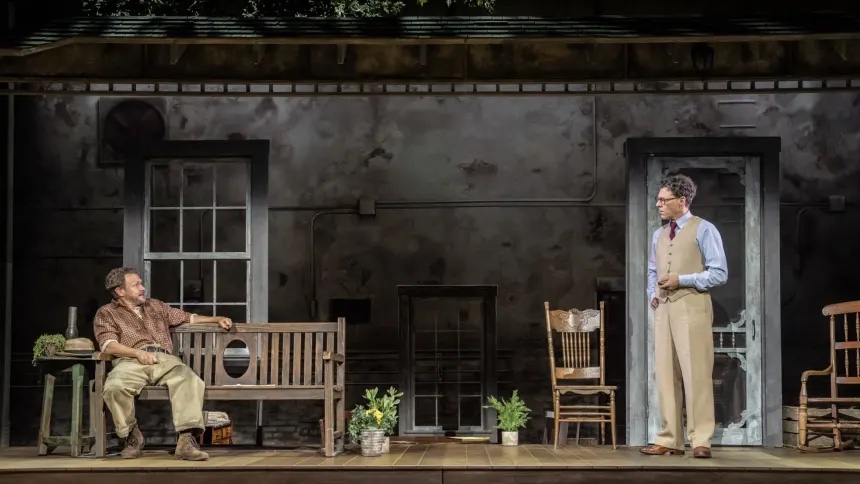
Finally, Tom Robinson is such an emotively key figure and Aaron Shosanya is note perfect, playing the role with an unshakeable strength of character but also recognising the fear of this good man horrifyingly wronged. Mayella Ewell is also a tough role of course – risible yet pitiful – and Evie Hargreaves is brilliant, capturing Mayella as something of a skittish, broken-winged bird; meanwhile the cruel Bob Ewell is played with uncomfortably convincing venom by Oscar Pearce, giving a snarling face and a growling voice to the racial hatred at work in Maycomb.
Rarely does an adaptation do justice to the original as this one does. It tells the story beautifully and reminds us again and again why it remains such an important classic as time ticks onwards. Not only is it buoyant and engaging in its approach, but a better bit of casting would be mighty hard to find. The story remains as charming, moving and inspiring as ever – catch this one if you can.
To Kill a Mockingbird is at Leeds Playhouse until October 4th 2025 – more information and tickets can be found here.
 Always Time For Theatre
Leave a comment