
June 2023
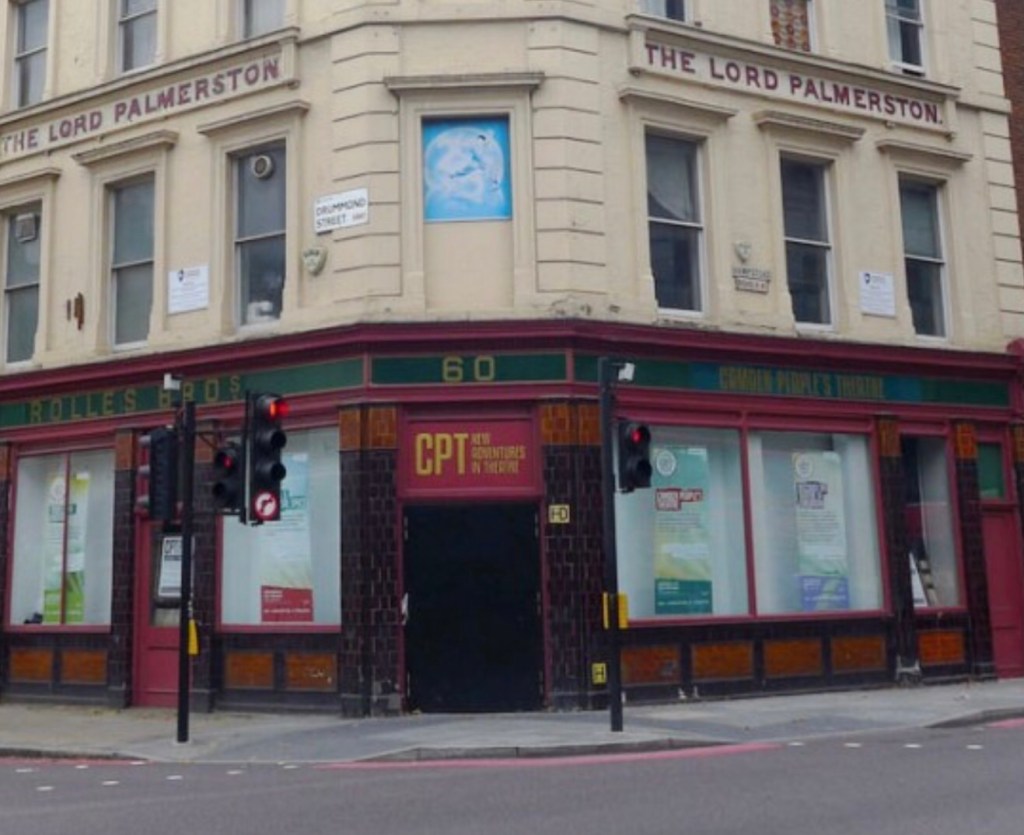
The Camden Fringe is fast approaching (official dates this year are 31st July – 27th August). Among those debuting new work this year is Caitlin Jones, who brings her one-person play “The Girl With The Glass Heart” to the Camden People’s Theatre from August 20-21st. Here, Cait chats about advocating for herself to secure a place at this year’s fringe, her passion for raising awareness about issues impacting on young people today, and of course, her new work.

So let’s start at the very beginning! How did this production come to be – the who, the what, the where and the why?
I’ve always been an extremely passionate creative: writing stories from the moment I could hold a pen and directing plays my friends and I would put on for our parents in the garden. When I got to my teens, I realised I had all these exciting stories sitting inside my head that I really wanted to write about and share, but I didn’t know how I could possibly do any of that as a sixteen-year-old student.
I’m aware of the National Theatre’s “New Views” Festival for young playwrights in schools, which is fantastic, but my school doesn’t do it, so I couldn’t really find a way in. That is until I came across the Camden Fringe. At first I was even apprehensive about this, as I didn’t know where they stood on performers under 18, but after some discussion over email as well as negotiating with the Camden People’s Theatre (settling on the decision that I would need a chaperone when in the theatre/rehearsal space), they very kindly agreed to take me on.
The story itself is something I’ve been wanting to share for an extremely long time; it being an amalgamation of my own experiences with mental health and those of other young people I’ve had the privilege of meeting and working with since becoming a part of the industry.
Mental health in teens is in my opinion one of society’s most misunderstood concepts, and creating what is essentially a sophisticated rant from the perspective of a teenage girl battling through anxiety disorder/depression whilst trying so hard to live a normal life is a story that many people are familiar with, but is almost never depicted properly or appropriately in the media, particularly with teenage characters, so I decided to take it upon myself to try and tell this story with as much authenticity and love as possible.
So it’s been quite a journey for you and this piece already! I’m so pleased you’ve managed to secure support to take part in the Fringe this year. Tell me a little more then; what would you say ultimately drives your central character in this piece?
Like a lot of people dealing with mental health issues, no matter their age, what drives my character most is her complete determination to be okay. Finally obtaining the courage to think well of herself and be comfortable in her own body and mind feels so far away for her, and whilst this may sound like the mindset of many teenage girls dealing with some insecurity which is completely natural and normal, dealing with these feelings along with severe anxiety and depression is the furthest thing from natural. You’re completely at war with yourself the entire time, so the drive to finally make that peace with your mind and live comfortably with your anxiety is imperative. This is the essence Lana carries with her throughout the play, and is eventually (sans spoilers) what drives her to the beginning of a turning point.
Can audiences expect light and dark along the way, or is The Girl With The Glass Heart intentionally all of one, none of the other?
The subject matter and some of the content is yes, I will admit, quite dark, but that’s because it has to be. The last thing I want to do is shy away from the truth of living with mental illness as a young person, which naturally does come with a lot of darkness. That being said, it isn’t under any circumstances a complete misery-fest, because that would also be diverging from the truth.
Lana’s sense of humour, sweary quips and candid remarks about the world she lives in are vital to her witty and twinkling personality. It’s a huge misconception that people with depression are constantly miserable and one-dimensional – this couldn’t be further from the truth. Light and shade is so essential to this character and the piece as a whole, as it demonstrates the dualistic nature of mental illness: showing that when you do find those moments of joy and humour, they are completely iridescent and very hard to let go of.
And who are you hoping will see this work and what are you hoping they’ll take away with them?
I want as many young people as possible to come and see this show, whether they deal with mental illness or not, so that they can feel heard. Dealing with a mental health issue in silence is torture, and I’m hoping more than anything that watching this piece will help to give those experiencing this the courage to speak up and deter any shame they may encounter due to what they’re dealing with. I’m also really eager for people who may not have a mental illness themselves, but know or love someone who does to watch it too, so that their sense of empathy and understanding is increased, and that any former misconceptions or stigmas they may have had about this topic can be corrected.
Are there trigger warnings or age restrictions to be aware of?
This play contains strong language, discussions of mental illness and references to physical abuse from a parent. It doesn’t go into pain-staking detail on the latter, but I would still recommend this performance to those aged 14+.
The Girl With The Glass Heart sounds to me like important work – I really hope you can get the right audiences in front of you come August.
Now, let’s go to a little quick-fire round about you. Your first experience of theatre/ live performance?
My Mum and Dad took my sister and I to see A Midsummer Night’s Dream at a Shakespeare In The Park festival when I was 8 years old. Captivated by the magical acting, I remember asking my Mum afterwards, “People can do this as a job?”, and when she answered yes, I never looked back. That was the moment I fell in love with performance – and I feel very lucky to be able to remember it so clearly.
Dream role or venue to play?
One of the lovers in A Midsummer Night’s Dream, preferably at the National (ambitious much). I love queer re-imaginings in modern productions of Shakespeare, so playing a female Lysander is the ultimate dream. Not too likely, but not impossible!
Your route into the arts?
I began training as an actor at age twelve at weekly drama classes, which I really enjoyed, but I always knew I wanted to go further. I auditioned for the National Youth Theatre when I turned fourteen and got in – which was a really lovely shock! A few months after my NYT course, I became a member of the Globe Youth Theatre and was also accepted into the Globe’s inaugural Young Company, for which we performed Shakespeare’s tragicomedy “Cymbeline” in the candlelit Sam Wanamaker Playhouse. As well as acting, I also composed and sung my own music for the show, which felt completely surreal. It wasn’t long after these experiences that I realised theatre was not just something I wanted to perform, but also something I wanted to create. In my opinion, writing, be it through music composition, plays or poetry is the closest thing we as humans have to creating magic.
The one thing you’d like the power to improve in the industry?
More people need to realise the sheer importance of young people in this industry. I talk about this idea a lot in the show, but we are the future of not only the arts, but of everything. Our opinions and ideas are so crucial yet so passed over by a great deal of society. We’ve been through a lot as a generation, and there are so many brilliant stories that need to be told, and there’s no better way to tell a story than through art. I essentially want young people to have more agency and opportunity in mainstream theatre – our stories would add a great deal of spark to the industry, and a reminder that our futures needn’t be something to fear despite everything we’ve had to face, particularly in recent years.
And finally, what would your advice be to up and coming creatives?
This might sound cliché, but my best and honest advice for up and coming artists would literally be to just go for it. Even if it starts with your local youth theatre or a school play. It all helps. I’ve met people who’ve said something along the line of “I’d love to do this, but I know I’d have no chance.” No, the only thing ensuring that you have no chance is your own self-doubt. I’ve been in that position many times, but the only things that have stayed with me are the wonderful experiences I’ve had from overcoming it.
So there you have it! You can catch Caitlin Jones’ “The Girl With The Glass Heart” at Camden People’s Theatre from August 20-21st 2023 – tickets and more information can be found here.

 Always Time For Theatre
Leave a comment