Friday, 26th January 2024 at The Cockpit Theatre, London
⭐️⭐️
Reviewer: Emma Dorfman
Though the premise is intriguing, “The Ending” doesn’t quite deliver what it says on the tin. Billed as “what happened after the classic story of Orpheus and Eurydice,” you might expect a re-jig to the ending of the classic myth. The ending, however, never comes.
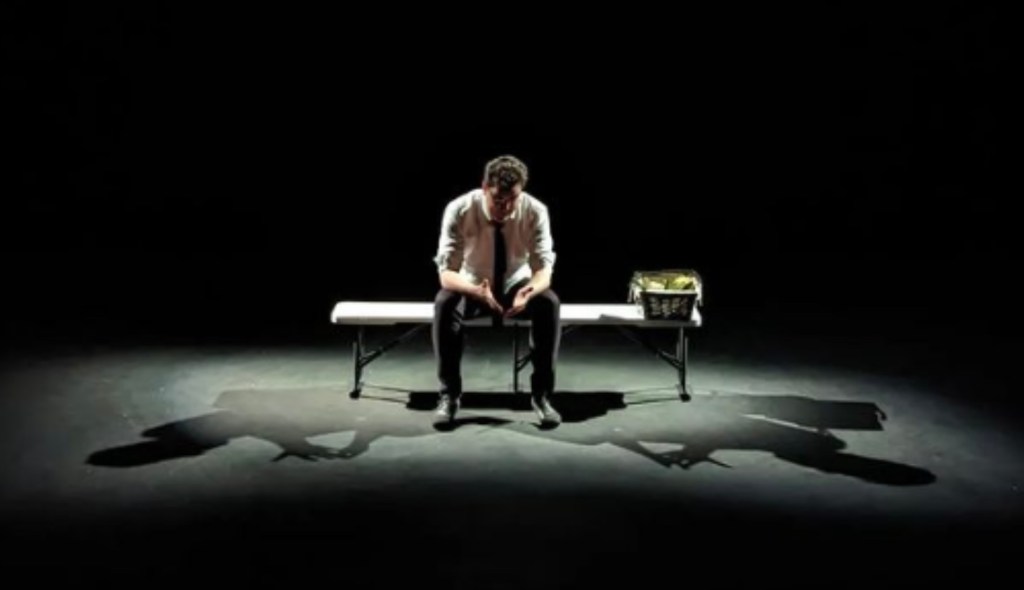
What follows for most of the short two-hander is a circuitous questioning between Orpheus (Tom Sparrow, also the playwright) and Eurydice (Megan Basnett) on several different existential and loosely connected ideas that never quite seem to find a through line. Between each scene, you may find yourself asking, “well where did this come from?” And you might also be asking, “where is this going?”
There is a reason that myths are told and re-told time and time again. Our Eurydice says as much at the very top of the piece. “The Ending,” however, could benefit from a more distinctive perspective around this classic tale. Sparrow’s writing stretches out the love story between Orpheus and Eurydice— how he came to fall in love her for the simple fact that she asked how many planes there were in the sky as opposed to stars. Moments like these, which veer slightly from the well-known story, stick out because they add to the narrative. Other moments, such as when Orpheus hashes and re-hashes and re-re-hashes why he turned around at that last moment, take away from the narrative. If “The Ending” is to be an adaptation, its writing should probably move a bit further from the original.
An attempt at this is certainly made in the staging of the piece: the couple is donned in modern, funerary costume (likely the courtesy of Alice Robb, billed as both designer and director of the piece). Orpheus wears a simple white button-up, black tie and trousers whilst Eurydice wears a white, summery dress with hair tied up in cute-as-a-button pigtails. Initially, the choice of costume is an apt metaphor for death and what comes after, which is the precise subject of what will be the first of many scenes (but more so, vignettes).
The remainder of the set is bare to perhaps mirror the musings on existentialism and nothingness embedded in much of the text: little is added to The Cockpit’s vast black box save a skinny white bench and a picnic basket filled with a bouquet of white flowers. The minimal set means that the two actors are often swallowed up by the humongous Cockpit stage— a true enemy of the intimacy that the piece requires.
Also threatening to detract from the writing further is the use of frequent blackouts. They occur after every single vignette, stopping the action in its tracks and further preventing any true overarching theme from emerging. Overall, I have to say I was very much looking forward to the radical adaptation that “The Ending” promises. I only regret that the work didn’t quite deliver on that promise.
The Ending has completed its run, but you can check out other listings at The Cockpit here.
 Always Time For Theatre
Leave a comment