
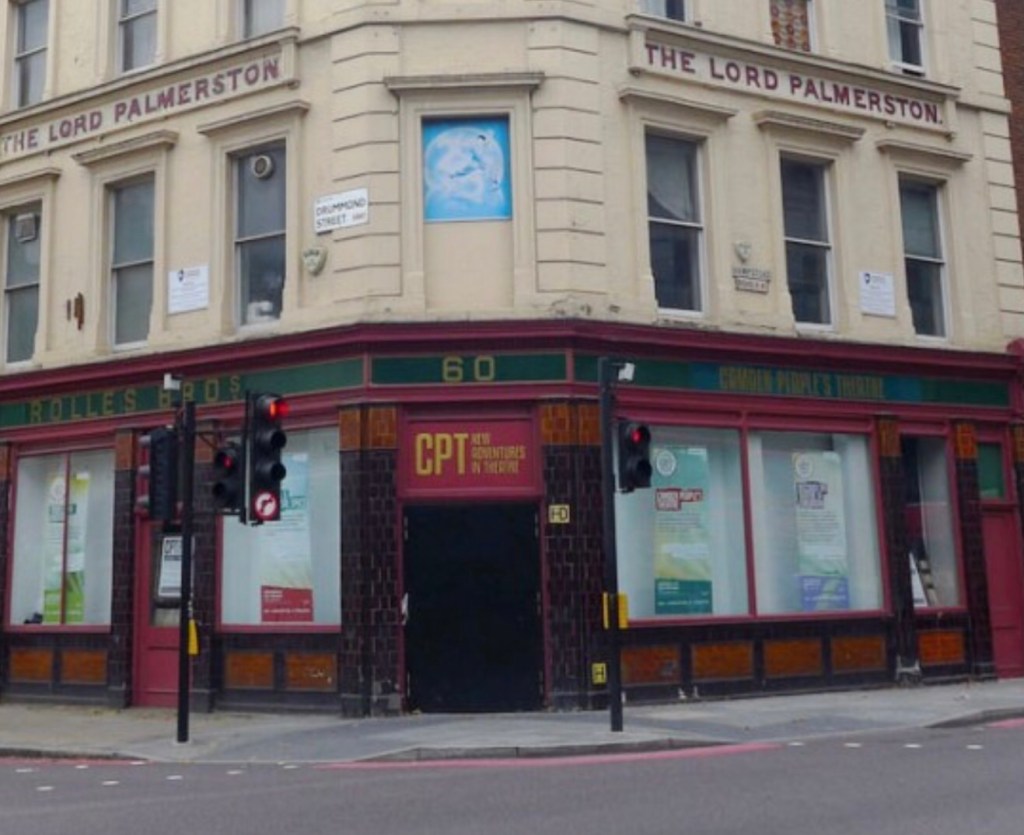
Tuesday 8th August 2023 at Camden People’s Theatre.
⭐️⭐️
Reviewer: Emma Dorfman
‘I like writing about sex.’ If I had to pick one, unifying, standout line, this one is undoubtedly a keeper. It is both the crux of, and confusion within, Alex Millington’s interactive, metatheatrical two-hander in which he proceeds to re-create a previous encounter with a sex worker, Crystal.

Crystal is to be played by Helen, the writer/actor’s real-life wife. As Alex explains, what follows is a re-creation of true events. Some critical details have been changed, but it’s all mostly true. The concept of truth throughout the piece, just like the comment about writing about sex, continues to pop up and percolate throughout the piece, but it hasn’t figured out what it’s really about yet.
Though Alex says, ‘I like writing about sex,’ the actions that follow seem to be not at all about sex. Alex is a near-demi-sexual, even acknowledging at one point that he’s not the kind of guy who does one-nightstands. He has four appointments of just talking with Crystal before anything close to a physical encounter occurs. The climax (pun intended) of the piece does occur when the two finally have sex during the fifth encounter. However, these ‘encounters’, to both Alex and the audience, feel more like dates than paid appointments. It is difficult to get past the fact that Alex’s character has effectively gotten away with cheating on his wife– explaining that these encounters are for ‘research’ for his latest play. It is all the more difficult to get past when we discover that this isn’t quite as much a sexual encounter as it is emotional. Hence, the confusion in ‘I like writing about sex’.
Also confusing is the very premise of the show itself. Why would a writer do this? Why would he choose to depict a relationship between a sex worker and a client, and supposedly participate in real life as a means of ‘illuminating’ the world of sex workers in Great Britain? Now, there’s no way to really tell if Alex actually did this in real life. This is yet another metatheatrical layer that confounds notions of fact and fiction. What points are lies and which parts of Alex’s story are true is something of great importance to Helen, and there’s a lot of sensitivity about ‘the truth’ in their dynamic: is that one-night stand comment really true? Did he really make up a fake name, fake profession, fake heartless ex-girlfriend during these encounters? These are but a few things Helen wonders aloud. And it’s not necessarily clear why these minute differences are so important if Helen appears relatively unphased from the very premise of the construction of the play.
Furthermore, if we are to believe the show’s initial premise, as well as Alex’s reasons for doing this, is he trying to be ironic by using the sex worker’s story as his own? Is exploitation trying to be pointed out here as beyond sexual and, if so, is Alex aware of how much his character- his very person, actually- pretty much dominates the narrative?
The writer’s position in the narrative, as well as the confusion on ‘why this story’, ultimately solidified towards the end of the piece, in which Alex gets beat up by Crystal’s pimp (or, in modern parlance, trafficker). He invites the audience to tear apart the already-haphazard set, with pieces of caravan-related items strewn about. In a cinematic ending, with a cinematic soundtrack to match, Alex finds himself pleading for his wife, Helen, to come to his rescue. The need for audience interaction is unclear here. Perhaps there is a misunderstanding that, in order for something to be metatheatrical, it must also be interactive. However, the plot tends to lose impact in these interactive moments. And while the experimentation is something to be admired, I’m afraid these devices haven’t quite yet found their footing.
A Caravan Named Desire is at Camden People’s Theatre until August 12th 2023 as part of the Camden Fringe – more information and tickets can be found here.

 Always Time For Theatre
Leave a comment