July 2023
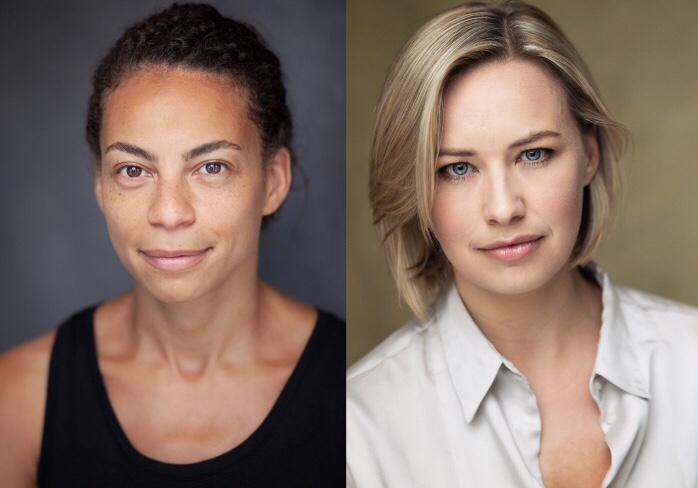
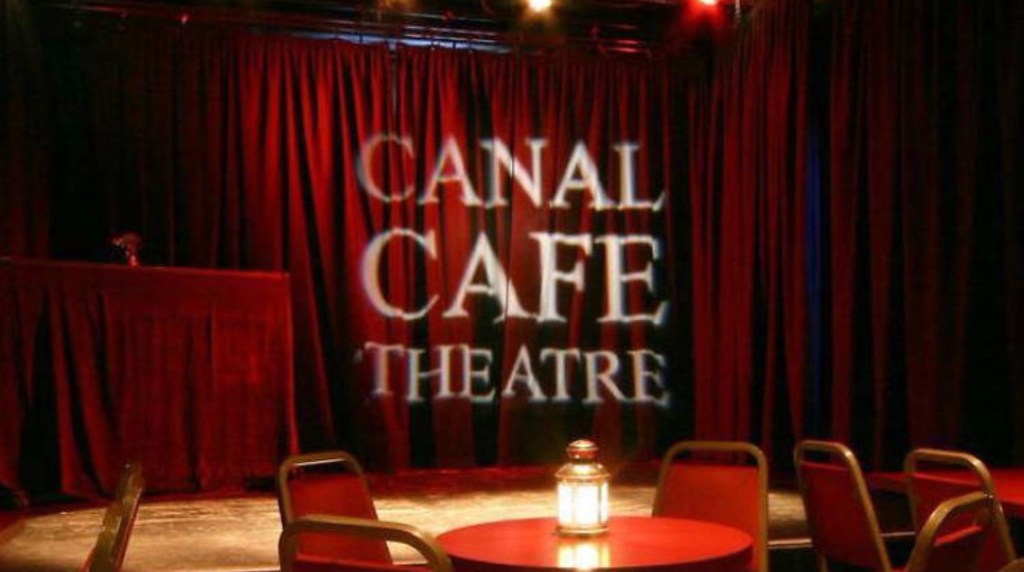
Thirty years after its first staging, a production of “The Vagina Monologues” is heading to the Camden Fringe, as relevant as ever. Tackling taboos and raising important awareness along the way, the show will play at the Canal Cafe Theatre 12th-15th August. Here, producer and cast member Aurore Padenou (AP) and director Lorna Dempsey (LD) chat about the show, its intentions and their thoughts on the industry they love…

So, The Vagina Monologues are soon to be back on stage. Tell me a bit about the show.
AP: The Vagina Monologues is a play written by Eve Ensler in the 90s. She collected interviews of over 200 women of different ages, social classes, ethnicities, religious beliefs, professions. She got women to talk about their vaginas, and beyond the anatomical word, it led them to talk about their relationship with their sexuality, feelings, traumas, questions, joys and pains.
LD: The show is a series of monologues performed by various women that explore and celebrate women’s experiences, particularly focusing on issues related to sexuality, gender, body image, and empowerment. It’s fun, freeing, and full of feeling.

And how did this production come about?
AP: It’s my first production. I wanted to create work for myself and other actors and this play came to my mind. I also bumped into the book at a flea market so I took it as a sign. I saw The Vagina Monologues in France when I was in my twenties with my mum. She dragged me to see it, I did not know at all what to expect and it really shook me up. I laughed, I cried, I reflected and I remember this play as if I watched it yesterday.
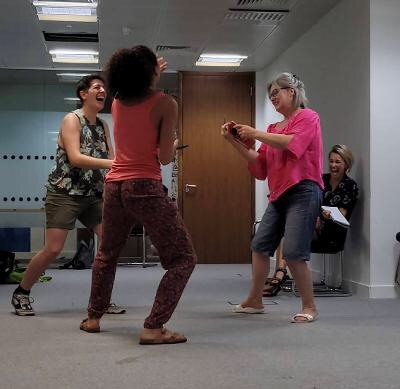
I met Juliet in an acting class that was taught by Lorna, and I could totally see Juliet in this piece. I reached out to her to know if she would join me on this project and it all started there. She mentioned that Lorna might be interested to direct it and then Lorna found the last actress, Cara, who was also one of her students.
LD: I was approached by Aurore sometime last year to direct the play. At first, the fear of God (as I’m from Catholic Ireland) went through me as I repeated the word “Vagina”. Before I read the play in its entirety I said YES. If it scared me like that, made me uncomfortable, I knew I needed to work on it to make me grow as a human and director. Having Aurore, Juliet & Cara as the cast I was ready to create my vision of The Vagina Monologues to life.
What’s the most important thing you want people to know about this show and its intentions?
AP: The message of this play is still very current today and we wanted to make the voices of these women heard. It addresses the taboo around the word vagina, the insecurities around it, sexual orientation, sexual abuse, sexual pleasure…
As beautifully put by Variety reviewing the book: “’Spellbinding, funny, and almost unbearably moving … a work of art and an incisive piece of cultural history, a poem and a polemic, a performance and a balm and a benediction”.
LD: I want people to know my intention is to celebrate the strength, resilience, and diversity of women, encouraging self-expression and empowerment. That’s what these monologues are all about. Having created 9 different characters that could be our neighbor , sister or co-worker, I just know that the audience will resonate with it.
Can audiences expect light and dark with this show?
AP: It does cover both so you can expect laughs when getting to hear different types of moaning for example but it also covers women’s vulnerabilities and insecurities and very intimate stories which reveal some wounds underneath.
LD: The audience can expect an emotional rollercoaster , something I feel live theater brings like no other medium. “The Vagina Monologues” seeks to break the silence surrounding topics like menstruation, female genitalia, and sexuality, encouraging open dialogue and education.
Title aside, are there trigger warnings or age restrictions to be aware of?
AP: As mentioned, there is reference to sexual abuse, the language can be crude and some swearing is involved.
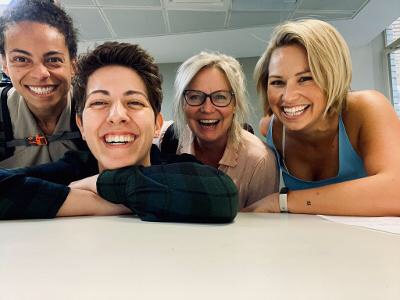
Now, cast members Juliet Prew (JP) and Cara Kiri (CK) join for some quick-fire questions…
First experience of theatre/ live performance?
AP: I was 6 years old and played Pedrolino (or Piero), a commedia dell’arte character. I had barely any lines and had to stay under a blanket during most of the play because Piero’s dream was being performed on stage. But still, I can remember the stage, the warmth of the lights, the audience, the silence between the words, the feeling as being Piero, and being so full of emotions. It never left me.
LD: I grew up on the theatre and my first live performance that was in front of a significant crowd was when I was cast as one of Barney the Dinosaur’s backyard gang ( the real one from America) . I was 9 years old and it was then I found my home.
JP: my first live performance was at nursery school as Miss Piggy. I remember I had an egg box snout on elastic round my head.
CK: I was so young that I couldn’t tell you what the show was, but I do remember being dressed up in makeshift material that was definitely not made to be a costume. We had a big school assembly with parents attending and I had one line to say. Once I’d said it I remember thinking “is that it? I want to play some more”. I was hooked.
Dream role or venue to play?
AP: Olivier stage of the National Theatre, a magical stage…
JP: Dream role: Queen Margaret in Richard III , Dream venue: Royal National Theatre
CK: My answer frequently changes, at this point in time I’m more curious about the depth of character I am able to discover.
Your route into the arts?
AP: After my experience at 6 years old, I came back to acting during University and never really stopped. I studied law and worked as an in-house legal advisor but I was part of classes or amateur companies as well. When I arrived in London in December 2016, I started doing classes here, still working as an in-house, more focused on screen acting and was part of the Identity School of Acting for a year. I took the plunge in January 2022 and focused on acting. I played in some student films, a play in my local theatre, a feature film and now this production.
LD: My road to the arts was when I came out of my mother’s vagina. From the age of 3 I was in a dance class, performing onstage and I am still in the land of theatre and film 33 years later.
JP: My route into the arts was via BBC Radio Drama; my first job was Rinca, a Scottish Princess in Myndag & The Challice of Wisdom, a series for Radio 5 for schools.
CK: A Performing Arts degree at the University of South Wales, Meisner training via The Actor’s Temple in London and years of castings, workshops, drop in classes – not forgetting the spontaneous improvisations at the bathroom mirror.

The one thing you’d like the power to improve in the industry?
AP: I’d love to see more international casts in terms of accents and origins. I find that if you do not speak with a perfect British accent or have the ability to do regional English accents, then your options are very limited mostly to productions which require a foreign accent. I could understand the need to have a certain accent for historic movies or certain requirements for authenticity although we can see Johnny Deep as Louis XV in Maiwenn’s film Jeanne du Barry or Joaquin Phoenix in Ridley Scott’s film Napoleon and as long as the actors makes the character believable, this is probably what matter the most beyond their accent or nationalities. And for most of the productions I do not understand why it’d not be open to a wider variety of accents and origins. The UK and even more London is so multicultural, it should also be reflected in theatre, TV and cinema.
LD: I think it is on the rise but awareness for the actor or any creative for that matter, mental health and well being. Also more accessible financial support to create and make art.
JP: Fairness of opportunity for all. Not just politically correct casting but a system that regularly gives people who’ve been around in the industry a long time but who, for one reason or another, may have been overlooked.
CK: Accessibility of sharing invaluable information and creating healthy conversations into the realities of the highs and lows of this industry. That’s why I created Online Green Room, the co-regulation community for actors.
Finally, why should audiences come along to The Vagina Monologues this August?
AP: The issues related by the stories of the different characters will find an echo with all genders and generations; this is a play about love, hope, despair, sadness and joy, and these emotions are a worldwide non-specific gender language.
LD: To break taboos and open dialogue and emotional connection. To understand, to be educated and to reflect. Most importantly: to be included in the empowerment of women.
JP: It’s a funny, moving show about real women and real experiences, looking at subjects that are still shrouded in mystery, prejudice, myth and nonsense. A revelatory experience!
CK: Feed your playful curiosity instead of the fear of the unknown.
So there you have it! You can catch “The Vagina Monologues” at the Canal Cafe Theatre 12th-15th August as part of this year’s Camden Fringe. More information and tickets can be found here.

 Always Time For Theatre
Leave a comment